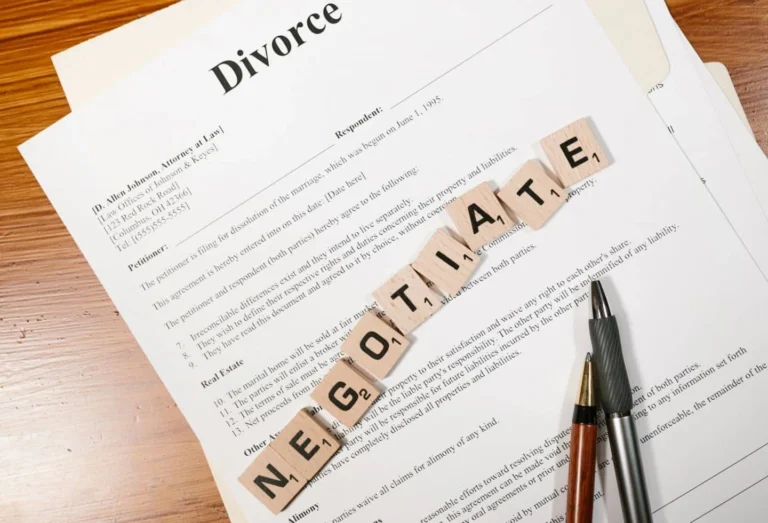
Guide to Uncontested Divorce in Georgia
Guide to Uncontested Divorce in Georgia An uncontested divorce in Georgia does not necessarily involve courtroom drama. When spouses agree on the important terms of ending their marriage, an uncontested divorce in Georgia can provide...
-
0 comments
-
35

Guide to Uncontested Divorce in Georgia
An uncontested divorce in Georgia does not necessarily involve courtroom drama. When spouses agree on the important terms of ending their marriage, an uncontested divorce in Georgia can provide a more efficient, predictable, and cooperative path toward a final divorce decree. An uncontested divorce in Georgia is the same as no-fault divorce in other states.
An uncontested divorce does not mean that there are no important decisions to make. Spouses may still need to divide real estate, financial accounts, retirement benefits, debts, vehicles, personal property, and other assets. Parents must also address child custody, visitation, parenting schedules, child support, health insurance, and other issues affecting their children. Spousal support may also need to be resolved.
The primary difference is that the spouses resolve these matters through agreement rather than asking a judge to decide disputed issues at trial. When the parties reach a complete settlement, the agreement can be submitted to the Superior Court as part of the divorce process.
What Is an Uncontested Divorce in Georgia?
An uncontested divorce generally means that the spouses have resolved the issues necessary to end their marriage and do not require the court to conduct a trial to decide their disagreements.
Georgia Legal Aid explains that a divorce can proceed much more quickly when spouses reach a complete agreement and cooperate with the court process. Georgia’s Uniform Superior Court Rules also recognize divorce cases filed with complete separation agreements or consent orders resolving the issues between the parties.
A comprehensive divorce settlement may address:
- Division of marital property
- Allocation of marital debts
- Ownership or sale of the marital residence
- Division of bank and investment accounts
- Retirement accounts and pensions
- Child custody
- Parenting time and visitation
- Child support
- Health insurance for children
- Uninsured medical expenses
- Spousal support or alimony
- Life insurance obligations
- Tax-related issues
- Attorney’s fees, when applicable
- Other financial or parenting responsibilities
An uncontested divorce can reduce conflict and litigation expenses, but the agreement should still be carefully prepared. Once incorporated into a final divorce decree, many provisions become legally binding court orders.
Basic Requirements for Filing for Divorce in Georgia
Georgia law generally requires a person filing for divorce to have been a bona fide resident of Georgia for at least six months before filing. A nonresident may also be able to file against a spouse who satisfies Georgia’s residency requirements in the proper Georgia county. Divorce cases are handled by Georgia Superior Courts.
Do you need a divorce lawyer? Technically no; however, the process is a bit complicated. Because you will have to live with the results and outcomes, youcannot afford mistakes. Even if you and your spouse work together on details, you should still hire lawyers to review your terms and prepare the documents. To learn more you should invest in a consultation with experienced uncontested divorce lawyers.
Venue—meaning the county where the divorce should be filed—also matters. In many cases, the action is filed in the county where the defendant spouse resides, although exceptions can apply based on residency and the parties’ circumstances.
No-Fault Divorce in Georgia
Georgia recognizes several statutory grounds for divorce. The commonly used no-fault ground is that the marriage is irretrievably broken. This allows spouses to obtain a divorce without requiring one spouse to prove marital misconduct by the other. O.C.G.A. § 19-5-3 identifies an irretrievably broken marriage as a statutory ground for divorce.
What Is the Uncontested Divorce Process in Georgia?
Every divorce is different, and local court procedures can vary. However, an uncontested Georgia divorce commonly involves several basic stages.
1. Identify and Resolve the Divorce Issues
Before finalizing an agreement, the spouses should identify their assets, debts, income, retirement benefits, parenting responsibilities, and other legal or financial issues. Reaching an agreement before understanding the complete financial picture can create expensive problems later.
2. Prepare the Divorce Documents
The filing spouse prepares a Complaint for Divorce and the other documents required by the appropriate Superior Court. Depending on the case, additional documents may include a settlement agreement, parenting plan, child support worksheet, financial information, acknowledgment of service, and proposed final decree.
3. File the Divorce
The divorce complaint is filed with the appropriate Superior Court clerk. Filing requirements, standing orders, forms, and administrative procedures can differ among Georgia judicial circuits and counties.
4. Complete Service or an Acknowledgment of Service
The defendant must receive legally sufficient notice of the divorce action. In a cooperative uncontested case, the defendant may execute an acknowledgment of service rather than requiring formal service by a sheriff or process server.
5. Complete Required Financial and Parenting Documents
If child support is involved, Georgia requires the appropriate child support worksheet and schedules. The parties’ settlement agreement must also contain required income information when child support is involved. Georgia’s child support system uses an income-shares approach that considers both parents’ incomes.
6. Complete Any Required Parenting Seminar
Some Georgia Superior Court circuits require parents involved in domestic-relations cases concerning minor children to complete an educational seminar before the divorce is finalized. Requirements depend on the court handling the case.
7. Obtain the Final Divorce Decree
Georgia law does not permit an immediate no-fault divorce. Under the Uniform Superior Court Rules, when both parties consent to a hearing, a divorce may be granted 31 days after service or the filing of an acknowledgment of service. The 31-day period is a minimum; it does not guarantee that the divorce will be finalized on day 31 because court schedules and case requirements can affect timing.
In an undefended case, Georgia law authorizes—but does not always require—an evidentiary hearing concerning the grounds for divorce and issues such as child custody, support, and alimony. Court procedures should therefore be confirmed in the judicial circuit handling the case.
The Four Pillars of Divorce in Georgia
Most substantive divorce negotiations can be organized around four major areas: property division, child custody and visitation, child support, and spousal support. Not every divorce involves all four. Couples without children, for example, will not need custody or child support provisions.
Understanding these four pillars can help spouses determine whether they have truly resolved everything necessary for an uncontested divorce.
Pillar One: Property Division
Property division can be one of the most important parts of an uncontested divorce. Georgia recognizes equitable division of property accumulated during the marriage. An equitable division focuses on a fair allocation of marital property under the circumstances and does not necessarily require every asset to be physically divided.
Property and debt issues may include:
- The marital residence
- Investment real estate
- Checking and savings accounts
- Stocks and investment accounts
- Retirement accounts
- 401(k) and pension benefits
- Business interests
- Vehicles
- Valuable personal property
- Credit card balances
- Mortgages
- Loans and other liabilities
Marital Property Versus Separate Property
Before negotiating property division, spouses should determine which assets may constitute marital property and whether either spouse claims a separate interest in particular property. Assets owned before marriage, inheritances, gifts, commingled assets, appreciation in property, and property acquired during the marriage can raise questions that should be evaluated before signing a settlement.
Do Not Overlook Debt
A complete agreement should address liabilities as carefully as assets. Assigning responsibility for a debt in a divorce agreement does not necessarily alter a creditor’s contractual rights. For example, removing responsibility for a jointly held debt between spouses does not automatically remove a person’s name from the underlying loan or credit agreement.
Pillar Two: Child Custody and Visitation
Parents pursuing an uncontested divorce must reach a workable agreement concerning their children’s care. Even when parents agree, the court retains responsibility for determining whether custody arrangements serve the children’s best interests.
Custody involves both legal and physical considerations. Legal custody concerns decision-making authority for important matters affecting a child, while physical custody concerns where and when the child resides with each parent.
Georgia Courts explains that judges often award joint legal custody while one parent may be designated as the primary physical custodian. A non-primary parent generally receives parenting time or visitation, subject to restrictions when necessary to protect the child’s best interests.
Georgia Parenting Plans
Georgia requires a parenting plan in cases in which permanent child custody or visitation is at issue. Parents who agree can submit a joint parenting plan. The final custody order incorporates a permanent parenting plan.
A comprehensive parenting plan may address:
- Regular weekday and weekend schedules
- Holidays
- Birthdays
- School vacations
- Summer schedules
- Transportation and exchanges
- Decision-making authority
- Educational decisions
- Medical care
- Extracurricular activities
- Communication between parents
- Communication between each parent and the child
- Travel considerations
- Other child-specific needs
Georgia law requires parenting plans to address where and when children will be in each parent’s physical care and subjects such as holidays, vacations, transportation, and other parenting arrangements unless otherwise ordered or agreed.
Pillar Three: Child Support
Parents cannot simply choose an arbitrary child support amount because they agree on it. Georgia applies statutory child support guidelines, and the court must address support for the children.
Georgia uses an income-shares model that considers the income of both parents. Calculations can also involve health insurance, childcare expenses, parenting circumstances, and statutory deviations when applicable.
Georgia updated its Basic Child Support Obligation Table effective July 1, 2024, including an increase in the table’s combined-income range to $40,000 per month.
Even in an uncontested divorce, the required child support worksheets and schedules should be prepared accurately. The settlement should also explain issues such as:
- Monthly support payments
- Health insurance
- Uninsured medical expenses
- Childcare expenses
- Payment procedures
- Income withholding when applicable
- Other approved child-related expenses
Child support belongs to the child, and parents cannot contract away the child’s legal right to support or permanently eliminate the possibility of modification.
Pillar Four: Spousal Support and Alimony
Spousal support, commonly called alimony, is another issue that may need to be resolved before a divorce becomes uncontested. Alimony is not an issue in every Georgia divorce.
Spouses may agree that:
- Neither party will receive alimony
- One spouse will receive periodic payments
- Support will continue for a specified period
- A financial obligation will terminate upon a defined event
- Other negotiated provisions will resolve the support issue
The wording of an alimony provision can have long-term consequences, particularly regarding future modification. Georgia law allows certain judgments for permanent alimony to be revisited upon a qualifying change in the former spouses’ income and financial circumstances, although settlement terms and the type of award can materially affect modification rights.
For that reason, spouses should understand both the immediate financial effect of an alimony agreement and what may happen if circumstances change later.
Temporary Orders During a Georgia Divorce
Although an uncontested divorce aims to resolve matters cooperatively, a divorce does not always begin that way. Sometimes the parties need temporary rules while the case is pending.
A temporary order can establish short-term responsibilities until the parties reach a final agreement or the court enters a final decree.
Depending on the case, temporary issues may involve:
- Child custody
- Parenting time
- Child support
- Temporary alimony
- Use of the marital home
- Use of vehicles or other property
- Payment of household expenses
- Attorney’s fees or other authorized relief
Georgia’s approved divorce forms contemplate requests for temporary and permanent custody, temporary and permanent alimony, temporary possession of the marital residence, vehicle use, child support, and equitable division of property.
What Is a Temporary Support Order?
A Temporary Support Order can address financial responsibilities while a divorce remains pending. Waiting until the final divorce to establish support may create hardship when one spouse has historically depended on the other’s income or when children need ongoing financial support.
A temporary hearing may therefore address child support, alimony, and related financial matters while the parties work toward final resolution.
Georgia’s Uniform Superior Court Rules generally require financial information before hearings involving temporary or permanent child support or alimony. The rules also address child support worksheets and schedules when child support is at issue.
A final divorce decree will ultimately establish the parties’ continuing post-divorce obligations, replacing or superseding temporary arrangements as provided by the court’s final orders.
When Might an Emergency Hearing Be Necessary?
Emergency hearings are not a routine component of an uncontested divorce. They become relevant when circumstances require the court to consider immediate relief rather than waiting for an ordinary temporary hearing or final resolution.
An emergency issue might involve an urgent concern affecting a child’s welfare, personal safety, access to essential property, or another matter requiring immediate judicial attention.
Georgia’s Uniform Superior Court Rules specifically recognize emergency domestic-relations actions and allow required financial affidavits and child support materials to be served on or before the emergency hearing or at another time ordered by the court. For ordinary temporary hearings, the rules generally require advance notice unless the court orders otherwise.
Whether circumstances legally justify emergency relief depends on the facts and the court’s procedures. A party facing an urgent situation should seek legal guidance promptly rather than assuming that an ordinary uncontested-divorce timetable will adequately protect their interests.
Temporary Protective Orders and Family Violence
A Temporary Protective Order (TPO) should not be confused with an ordinary temporary order entered in a divorce case.
Georgia law provides a separate process through which a person may seek protection from family violence. A person seeking relief may file a verified petition in Superior Court. When the required allegations and legal standards are satisfied, a judge may issue temporary protection on an ex parte basis—meaning the court can initially consider the request without the other party being present.
A protective order may be important when separation or divorce involves allegations of family violence. Depending on the circumstances and relief authorized by law, protective-order proceedings may address issues affecting contact between the parties and their immediate safety.
A TPO is not automatically issued because spouses are divorcing, arguing, or experiencing a difficult separation. It is a legal remedy governed by Georgia’s family-violence statutes and requires appropriate factual and legal grounds.
Safety concerns can also affect how custody and parenting matters are handled. Georgia’s parenting-plan statute expressly recognizes an exception involving emergency family-violence relief.
What Is a Qualified Domestic Relations Order?
Retirement benefits are easy to overlook during an uncontested divorce, but they can represent one of a marriage’s most valuable assets.
When certain employer-sponsored retirement benefits are divided between spouses, the divorce settlement and decree may not be sufficient by themselves to instruct the retirement plan to transfer benefits. A separate Qualified Domestic Relations Order (QDRO) may be required.
Under federal law, a QDRO is a domestic relations order that creates or recognizes an alternate payee’s right to receive all or part of the benefits payable under a qualifying retirement plan. The retirement plan administrator determines whether the order satisfies the plan’s requirements for qualification.
When Might a QDRO Be Needed?
A QDRO is commonly associated with the division of certain:
- 401(k) plans
- Other employer-sponsored retirement plans governed by applicable federal law
li>Defined-benefit pension plans
li>Profit-sharing plans
Not every retirement asset is divided through a QDRO, so the type of account and plan rules matter.
Do Not Leave the QDRO Until Years After the Divorce
The U.S. Department of Labor recommends gathering retirement-plan information early in the divorce process. It warns that failing to properly address retirement benefits and obtain an appropriate QDRO can create later disputes or jeopardize expected benefits.
If retirement benefits will be divided, the settlement should clearly identify what each spouse will receive and how gains, losses, loans, survivor benefits, timing, and related issues will be handled when applicable.
Are Divorcing Parents Required to Attend a Parenting Seminar in Georgia?
Possibly. Parenting seminar requirements can vary by Georgia judicial circuit.
Uniform Superior Court Rule 24.8 permits a Superior Court circuit to establish educational programs for parties involved in domestic-relations cases. Courts may require parties to attend a seminar of up to four hours concerning the effects of divorce on minor children.
The program may address topics such as:
- How divorce affects children
- Parental behavior during separation
- Co-parenting after divorce
- Children’s developmental needs
- Financial changes affecting children
The assigned judge may waive attendance for good cause in appropriate circumstances. When a seminar is required and has not been waived, failure to complete it can result in court action and may delay entry of the final divorce decree.
Parents should therefore check the local rules and standing orders of the Superior Court handling their divorce rather than assuming that requirements are identical throughout Georgia.
The Importance of a Complete Divorce Settlement Agreement
The settlement agreement is one of the most important documents in an uncontested divorce. A poorly drafted agreement can create ambiguity and conflict long after the spouses believed their case was finished.
A strong agreement should clearly explain not only what the parties have agreed to but also how and when each obligation will be completed.
For example, instead of merely stating that the marital home will be sold, the agreement may need to address:
- When the property will be listed
- Who chooses the real estate agent
- How the listing price will be determined
- Who lives in the property until closing
- Who pays the mortgage and expenses
- How repairs will be handled
- How an acceptable offer will be determined
- How the net proceeds will be divided
The same principle applies to vehicles, retirement accounts, debts, personal property, parenting schedules, insurance, taxes, and other obligations.
Specific language can prevent future disagreements.
Uncontested Does Not Always Mean Simple
An uncontested divorce can still involve substantial financial or legal complexity.
Professional guidance may be particularly valuable when a divorce involves:
- Significant marital assets
- A family-owned business
- Professional practices
- Investment real estate
- Retirement accounts
- Pensions
- Stock compensation
- Separate-property claims
- Inheritance issues
- Large marital debts
- Alimony
- Complex parenting arrangements
- Special-needs children
- Tax considerations
/ul>
Agreement between the spouses can eliminate the need to litigate these issues, but it does not eliminate their financial importance.
Can a Georgia Divorce Decree Be Modified Later?
Some portions of a Georgia divorce decree may be modified after the divorce, while others are intended to provide final resolution.
Child Custody and Parenting Plans
Custody and parenting arrangements can potentially be modified when the legal requirements for modification are satisfied. Georgia law requires a permanent parenting plan in custody modification actions as well as initial permanent custody cases.
Child Support
Child support may also be modified when statutory requirements are met. Georgia’s child support law permits modification based on qualifying changes involving circumstances such as parental income, financial status, or the needs of the child.
Parents cannot permanently waive the child’s right to seek an appropriate modification of support.
Spousal Support
Certain periodic alimony awards may be subject to modification based on qualifying changes in financial circumstances. However, the original agreement, type of award, statutory requirements, and wording of the divorce decree can affect whether modification is available.
Property Division
Property division should generally be approached as a final resolution rather than something the parties expect to renegotiate whenever circumstances change. This makes it especially important to identify, value, and properly address marital property before the final agreement is signed.
Do not sign an unfavorable property settlement based on the assumption that it can simply be changed after the divorce.
Common Mistakes in an Uncontested Georgia Divorce
The cooperative nature of an uncontested divorce can sometimes create a false sense that the paperwork is merely a formality. Common mistakes can include:
- Failing to identify all marital assets
- Overlooking retirement benefits
- Failing to address marital debts
- Using vague property-transfer language
- Failing to establish deadlines
- Preparing an incomplete parenting plan
- Failing to address health insurance or medical expenses
- Ignoring tax consequences
- Failing to determine whether a QDRO is necessary
- Assuming one spouse’s promise will be sufficient without putting it in the agreement
- Signing documents without understanding future modification rights
- Using generic forms that do not address the family’s actual circumstances
li>Using an incorrect child support calculation
Do You Need a Lawyer for an Uncontested Divorce in Georgia?
Not every person is legally required to hire an attorney to file for divorce, and Georgia Courts provides self-help resources and divorce forms. However, the fact that spouses agree does not necessarily mean that their legal or financial issues are simple.
A Georgia divorce attorney can help:
- Identify unresolved issues
- Review assets and liabilities
- Explain legal rights and obligations
- Prepare or review the settlement agreement
- Draft parenting provisions
- Address child support requirements
- Evaluate alimony provisions
- Identify retirement benefits that require special treatment
- Coordinate preparation of a QDRO when appropriate
- Prepare court filings
- Address local court procedures
- Help prevent ambiguous provisions that could lead to future disputes
Legal review can be particularly valuable before signing a settlement agreement because the goal should not simply be to obtain a quick divorce. The goal should be to obtain a complete, workable resolution that protects your interests after the divorce is final.
Frequently Asked Questions About Uncontested Divorce in Georgia
How long does an uncontested divorce take in Georgia?
An uncontested divorce can potentially be granted 31 days after service or the filing of an acknowledgment of service when the applicable requirements are satisfied and both parties consent to a hearing. Thirty-one days is a minimum timeframe, not a guaranteed completion date. Court schedules and incomplete documents can extend the process.
Do both spouses have to agree to an uncontested divorce?
For a fully negotiated uncontested divorce, the parties should reach agreement on the issues requiring resolution, including property, debt, custody, child support, and alimony when those issues apply. Cases in which a defendant simply does not respond can also proceed as undefended actions under different procedural rules.
Can parents agree to any amount of child support?
No. Georgia applies statutory child support guidelines, and child support must be addressed according to applicable law. Georgia uses both parents’ income when calculating support.
Is a parenting plan required in an uncontested divorce?
If permanent custody or visitation of minor children is at issue, Georgia requires a parenting plan. Parents who agree may jointly submit one.
Will we have to attend a parenting seminar?
It depends on the Superior Court circuit. Georgia’s Uniform Superior Court Rules authorize judicial circuits to establish parenting education programs and require attendance in domestic-relations cases involving children.
What happens to a 401(k) in an uncontested divorce?
The spouses may agree on how qualifying marital retirement benefits will be divided. Certain employer-sponsored retirement plans require a separate QDRO before the plan administrator can distribute an awarded share to the former spouse.
Can an uncontested divorce include alimony?
Yes. The spouses can negotiate spousal-support provisions as part of their settlement. An uncontested divorce simply means the parties have resolved the issue rather than requiring the court to decide it through contested litigation.
Can an uncontested divorce become contested?
Yes. If the spouses stop agreeing about property, custody, child support, alimony, or another material issue before the final settlement and decree, the case may require additional negotiation, mediation, temporary hearings, or litigation.
Can the divorce decree be changed later?
Certain provisions—particularly child custody, parenting arrangements, child support, and some forms of alimony—may potentially be modified when legal requirements are satisfied. Property division should generally be treated as final, making careful settlement planning especially important.
Moving Forward With an Uncontested Divorce in Georgia
An uncontested divorce can provide Georgia spouses with a more cooperative and efficient way to end their marriage, but reaching an agreement is only part of the process. The agreement should correctly resolve the legal, financial, property, and parenting issues that will affect both spouses after the final decree.
Start with the four primary pillars of divorce: property division, child custody and visitation, child support, and spousal support. Then consider whether the case also requires a parenting plan, parenting seminar, temporary support, emergency relief, a protective order, QDRO, or other specialized documents.
Most importantly, think beyond the day the divorce becomes final. Property transfers must actually occur. Retirement benefits must be properly divided. Parenting plans must work in real life. Support obligations must be clearly defined. Some provisions may later qualify for modification, while others may provide a substantially final resolution of the parties’ rights.
An experienced Georgia divorce attorney can review the complete circumstances, explain your options, prepare or evaluate settlement terms, and help move an uncontested divorce toward a legally sound final resolution.
Legal Information Disclaimer
This article provides general information about uncontested divorce in Georgia and is not legal advice. Divorce laws, court procedures, local rules, standing orders, and individual circumstances can affect a particular case. Anyone considering divorce should consult a qualified Georgia family law attorney regarding their specific situation.
If you are considering filing for divorce, we encourage you to arrange a consultation with a divorce lawyer. During your consultation, our lawyers can answer questions, and advise you of potential outcomes. Don’t rely on the internet or friends for legal advice. Divorce is a serious matter. Call a lawyer at 706-253-3060.
- Image by Mohamed Hassan from Pixabay

Latest Posts